Vestibular Infographic
How autistic and neurodivergent people experience the vestibular sense differently - from motion sensitivity and dizziness to seeking movement and balance differences.
The vestibular sense is located in the inner ear and tells us about balance, movement, and the position of our head in space. For many autistic and neurodivergent people, vestibular processing can be significantly different from neurotypical experience, affecting everything from daily movement to focus and regulation.
Common experiences
- Feeling dizzy or nauseous from movement, lifts, or escalators
- Seeking spinning, rocking, swinging, or fast movement
- Poor balance or coordination, frequently bumping into things
- Needing to move in order to stay focused or regulated
- Feeling anxious when feet leave the ground
Practical adjustments
Providing movement breaks, allowing wobble cushions or flexible seating, warning before unexpected movement, and creating safe spaces for sensory movement can all make a significant difference.
Who is this for?
Employers, educators, healthcare professionals, parents and carers, and anyone supporting neurodivergent people in daily life.
About the creator
This resource was created by Loren Snow, founder and lead trainer at Neurodiverse Training. As a neurodivergent individual himself, Loren brings lived experience and over a decade of professional expertise to every resource he creates.
Want to understand body-sense processing properly?
This infographic is a starting point. Our course Vestibular & Proprioception explains the body-sense systems, signs of over and under-sensitivity, and practical movement-based strategies that support regulation and learning. It carries a certificate worth 2 hours of CPD.
Explore the course →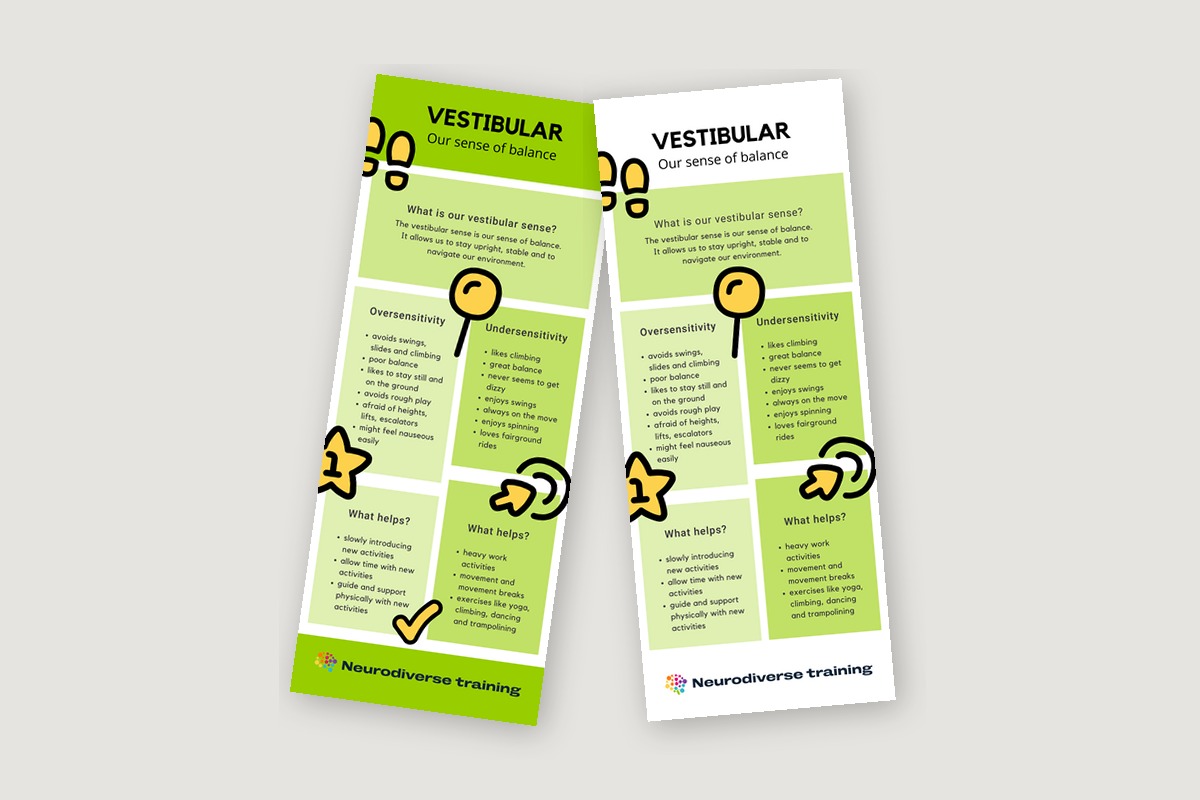
Download Free
Sign up to our mailing list once to get instant access to all our free infographics and posters.
Download sensory bundle → ← Back to Resources- High-resolution PDF
- Printable A3 & A4 sizes
- Accessible colour palette
- Created by our neurodivergent team
- Unsubscribe at any time